Virginia Governor Vetoes Skill Games Legalization and Fairfax Casino Proposal in Back-to-Back Moves

The Vetoes Unfold in Early April 2026
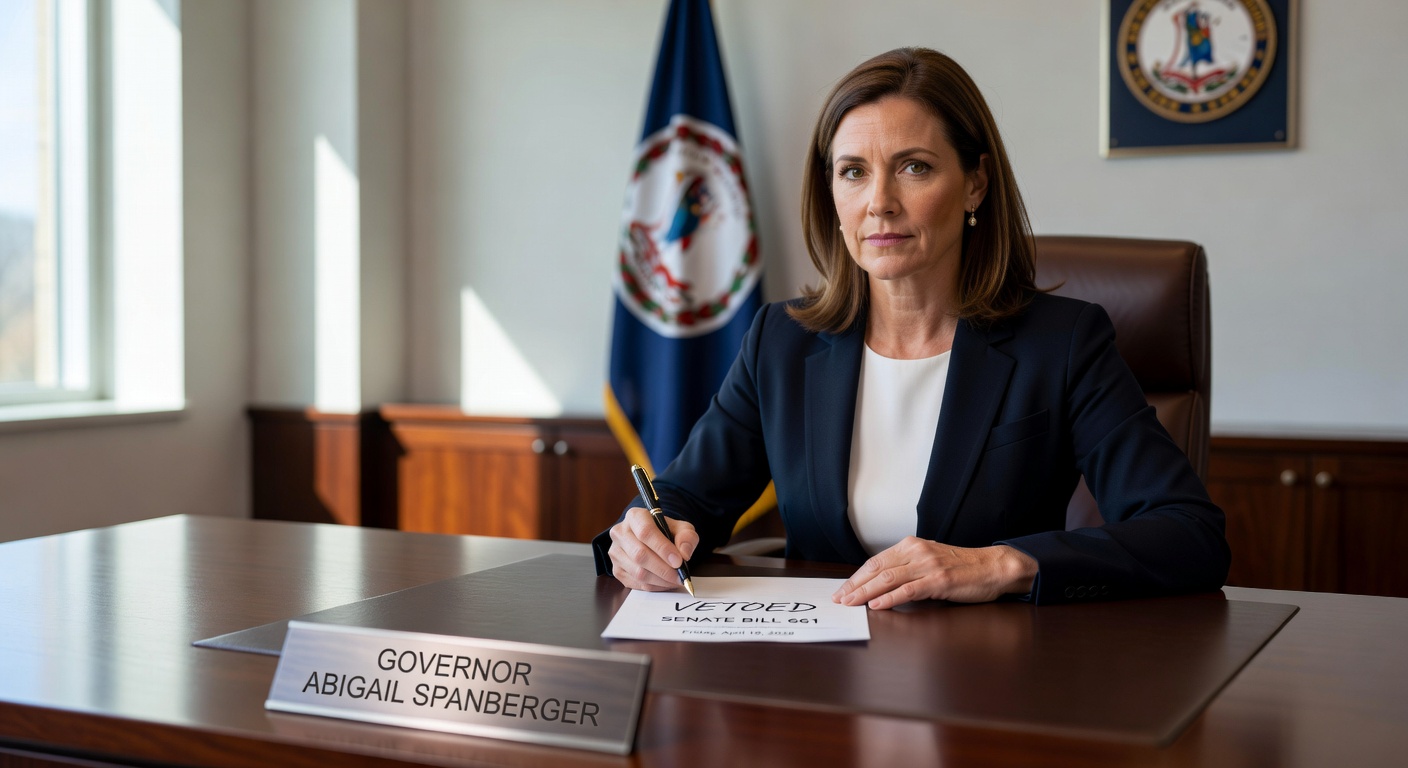
Virginia Governor Abigail Spanberger took decisive action last week, vetoing Senate Bill 661 on Friday, April 10, 2026, a measure that aimed to legalize up to 25,000 skill games machines under the oversight of the Virginia Lottery Board; the day before, on Thursday, April 9, she struck down Senate Bill 756, which sought to greenlight a new casino resort in Fairfax County without requiring local support or a referendum. According to reports from Gambling Insider, these moves highlight ongoing tensions in the state's gambling landscape, where lawmakers push for expansion while the governor prioritizes structured regulation.
Skill games, those electronic machines resembling slot machines but marketed as games of skill due to mini-games that supposedly influence outcomes, have operated in a legal gray area across Virginia for years; gas stations, bars, and convenience stores host thousands of them already, generating revenue yet dodging full gambling taxes and rules. Senate Bill 661 would have brought up to 25,000 of these devices under formal control, imposing a 20% tax on gross gaming revenues while capping machines per location at 10 in certain spots like truck stops and 30 in others such as bars. But Governor Spanberger, in her veto statement, pointed to risks of fragmented oversight that could invite illicit activity, undermine consumer protections, and hit low-income communities hardest, since these machines often cluster in underserved areas.
And then there's Senate Bill 756, targeting Fairfax County, one of Virginia's wealthiest and most populous regions just outside Washington, D.C.; the bill proposed a resort casino with 1,600 slots, 80 table games, and a hotel, all without the usual local referendum that voters elsewhere in the state have demanded for such projects. Proponents argued it would boost jobs and tourism, but critics, including the governor, flagged the lack of community buy-in, potential traffic nightmares, and the need for uniform rules across all gambling forms.
Background on Skill Games in Virginia's Regulatory Maze
These aren't new players on the scene; skill games exploded in Virginia after the 2020 legalization of sports betting and limited casinos, filling a niche where operators claim the skill element—like timing button presses—avoids strict gambling definitions, although courts have repeatedly shut them down in raids. Data from the Virginia Department of Alcoholic Beverage Control shows enforcement actions against thousands of machines since 2021, yet they keep popping up because no comprehensive law existed until attempts like SB 661. Observers note how the bill mirrored proposals in neighboring states like Pennsylvania, where similar devices now pay into education funds, but Virginia's version drew fire for splitting authority between the lottery board and alcohol regulators, creating what the governor called a "patchwork" approach.
Take one case from last year: Henrico County deputies seized over 100 machines in a single sweep, charging operators with illegal gambling; such incidents underscore the chaos that legalization advocates say SB 661 would fix through taxes projected at $200 million annually for schools and local governments. Yet experts who've studied gambling proliferation point out that without a single overseer—like a dedicated Virginia Gaming Commission—loopholes persist, and problem gambling rates climb; figures from the National Council on Problem Gambling reveal Virginia's helpline calls spiked 25% after recent expansions, a trend that fragmented rules might accelerate.
What's interesting here is how the bill allocated proceeds: 65% to K-12 education, 15% to the general fund, 10% to localities, and 10% to problem gambling programs, numbers that won bipartisan support in the Senate by a 24-15 vote back in February. But Governor Spanberger, a former congresswoman with a track record on consumer issues, held firm, advocating instead for all gambling—slots, tables, skill games, online betting—under one roof to mirror successful models in states like New Jersey.
Fairfax County Casino Push Meets Resistance
Shifting gears to SB 756, the Fairfax proposal came from Sen. Saddam Salim, a Democrat eyeing economic development in an area hungry for post-pandemic revenue; the site near Fort Belvoir promised 1,200 jobs during construction and 1,100 permanent ones, plus $50 million yearly in taxes, according to backers' estimates. Passed narrowly in the House 51-47 after amendments requiring labor peace agreements and minority hiring goals, it bypassed the referendum process used for Virginia's four existing casino projects in Norfolk, Danville, Portsmouth, and Bristol—each approved by voters after fierce local debates.
Those projects, by the way, have delivered: Temporary Caesars Virginia in Danville reported $415 million in gaming revenue for 2025, funneling $100 million to the state, while Hard Rock's Bristol site hit $200 million amid delays from Hurricane Helene. Fairfax backers argued their county, lacking such a resort, deserved a shot without the ballot hurdle, especially since Northern Virginia sees gamblers cross into Maryland's MGM National Harbor. But Governor Spanberger vetoed it swiftly, echoing concerns over disproportionate harms to vulnerable groups and the absence of voter input, a staple since the 2020 constitutional amendment capping casinos at five.
Here's where it gets interesting: Fairfax leaders themselves split on the idea; the Board of Supervisors never endorsed it formally, and community groups raised alarms about addiction risks in a high-density suburb where median incomes top $130,000 yet problem gambling doesn't discriminate by zip code. Studies from the University of Virginia's gambling lab indicate casinos boost local economies short-term but strain social services long-term, with low-income households nearby spending disproportionately—up to 30% of disposable income in some metrics.
Governor's Vision for Centralized Control
In both veto messages, Governor Spanberger laid out a clear alternative: a unified regulatory body handling all forms of gambling, from lotteries to sportsbooks, ensuring consistent taxes, player safeguards, and enforcement; she warned that piecemeal bills like these erode public trust and open doors to money laundering, citing federal probes into skill game networks tied to organized crime in other states. This stance aligns with her 2025 campaign pledges for "smart growth" in gaming, now that Virginia's market—$5 billion in handle last year—ranks among the top 10 nationally.
Lawmakers aren't done yet; the General Assembly reconvenes April 22, 2026, for veto session, where overrides need two-thirds majorities in both chambers—26 senators and 67 delegates. SB 661 cleared the Senate 24-15 but the House 51-44, falling short already; SB 756 passed tighter, House 51-47 and Senate 21-19, so the math looks tough. But here's the thing: Pro-skill game groups like the Skill Game Operators of Virginia have rallied small business owners, flooding Richmond with testimonials about lost income from seizures—some locations report $5,000 monthly per machine.
And on the casino front, urban Democrats might flip a few votes, especially if economic data sways them; Bristol's success, where unemployment dipped 2% post-casino, offers ammo. Those who've tracked these battles know overrides are rare—only 2% historically—but gaming bills carry cash clout from donors and operators like Bally's or Golden Nugget eyeing expansions.
Broader Context in Virginia's Gaming Evolution
Virginia's journey from lottery-only in the 1980s to a multi-billion hub today traces back to 2018's sports betting flirtation, derailed by a federal wire act glitch, then exploding post-2020 with FanDuel and DraftKings dominating mobile wagers at $4.8 billion handled in 2025 alone. Four casinos now operate, a fifth in process for Richmond (pending referendum), generating $1.2 billion revenue last year per Lottery data; skill games, if legalized properly, could add another layer, but without the governor's unified framework, they risk becoming the wild west.
People often find that states with centralized commissions—like Michigan's Gaming Control Board overseeing 26 tribes and three commercial casinos—see fewer scandals and higher yields; Virginia's split system, with the Lottery on lotteries/sports, Charitable Gaming on bingo/raffles, and ABC on skill raids, breeds overlap. One researcher at George Mason University analyzed 2024 seizures, finding 85% of machines lacked proper skill proofs, fueling the governor's illicit activity fears.
Yet operators counter with tech upgrades: Newer machines use verifiable skill metrics, audited by third parties, and tax compliance could plug a $300 million annual hole from untaxed play. Fairfax's pitch leaned on that too, promising union jobs and green building standards to sweeten the pot.
Conclusion
As the April 22 session looms, Virginia's gambling debate boils down to control versus cash; Governor Spanberger's vetoes stall SB 661 and 756, preserving her push for a single authority amid skill games' underground boom and Fairfax's casino ambitions. Lawmakers hold the cards now—will they override, compromise on a broader bill, or let summer recess cool things off? Data suggests the state's gaming revenue will climb regardless, hitting $7 billion by 2027 per industry forecasts, but how it's regulated shapes winners and losers. Observers watch closely, knowing this saga reveals the tightrope between economic boosts and social safeguards in America's gambling heartland.